In response to recent COVID-19 concerns, we are writing to assure our clients that we are taking recommended precautions.

Close
×

Would you like to switch to the accessible version of this site?

Go to accessible site Close modal window

Don't need the accessible version of this site?

Hide the accessibility button Close modal window
Accessibility View Close toolbar
Round dog and cat logo

US

(509) 837-4166

[email protected]

Open mobile navigation
  • Home
  • New Patient Center
    • What To Expect
    • Virtual Office Tour
    • Helpful Website Links
    • Payment Options
  • Forms
  • About Us
    • Services
      • Medicine
      • Surgery
      • Dentistry
    • Meet Our Team
  • Emergencies
  • Pet Memorials
  • Contact Us
  • Blog
  • Veterinary Topics
    • Pet Health
      • Chronic Conditions
      • Digestive and Oral Health
      • Diseases and Viruses
      • Pests and Parasites
      • Orthopedics
    • Today's Veterinarian
    • Choosing Your Pet
      • Finding Your Pet
      • Cats
      • Dogs
      • Exotics
        • Amphibians
        • Birds
        • Reptiles
          • Lizards
          • Turtles
      • Small Mammals
        • Ferrets
        • Rabbits
        • Domesticated Animals
          • Prairie Dogs
        • Pocket Pets
          • Chinchillas
          • Guinea Pigs
          • Hamsters
          • Hedgehogs
          • Rats
      • Livestock
        • Cows
        • Donkeys, Horses & Mules
        • Goats
        • Pigs
        • Poultry
        • Sheep
    • Living With Your Pet
      • Bringing Your Pet Home
      • Children and Pets
      • Providing Care
      • Travel
      • Saying Goodbye
    • Newsletter Library
      • Cats
      • Tips for Pet Owners
      • Behavior & Training
      • Fleas & Parasites
      • Keeping Pets Healthy
      • Recognizing Illness
      • Nutrition & Food
      • Pet Dangers
      • Seasonal Topics
      • Visiting the Vet
      • Equine
      • Newsletter Archive
        • Fun with Pets
        • Unbelievable Pets
    • Video Newsroom
      • Health Topics
      • Technology and Science
      • Other Interests
    • Newsletter Library
    • Client Survey
    • Pets4Kids
  • Home >
  • Articles >
  • Newsletter Library >
  • Visiting the Vet >
  • Caring for Your Pet Before and After Surgery

Caring for Your Pet Before and After Surgery

  • Created in Newsletter Library, Visiting the Vet
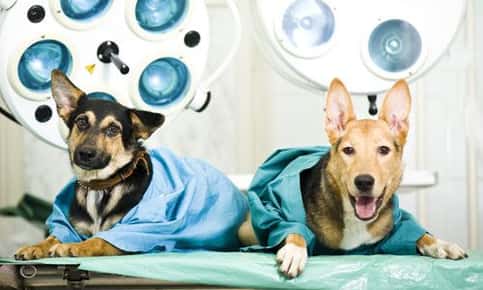
Image of dogs after surgery.

Is a surgery in your pet's future? If it is, you probably have a few questions about pre- and post-surgery care. Paying close attention to care recommendations will help you ensure that the surgery is just a minor disruption to your pet's normal routine.

Before Surgery

Stop Food

Your pet will need to stop eating prior to surgery. If your dog or cat eats prior to surgery then vomits, stomach contents can travel to the lungs and cause infections, pneumonia or respiratory distress syndrome. The exact time your pet must stop eating will vary depending on when the surgery is scheduled. In most cases, your furry friend can still drink water.

Some pets will need to eat light meals the morning of surgery. If your pet has diabetes, your veterinarian may recommend a small amount of food to prevent blood sugar fluctuations. Young animals may also need to eat small meals before surgery. Do not feed your pet unless you are specifically asked to do so.

Dig Out the Leash or Carrier

The morning of surgery is not the ideal time to try to locate a missing leash or carrier. Your morning will be less hectic if you find these items the day before surgery. If you have a cat that turns into the Tasmanian devil at the sight of the carrier, allow a little extra time in the morning for cat wrangling.

Pack Food and Medication

Ask your veterinarian if you should bring your pet's medications and a small supply of food with you. Although the hospital can provide food, introducing new food can cause an upset stomach.

Drop Your Pet Off Early

The day of surgery is a busy day for your pet. You will be asked to drop off your companion early in the morning to ensure that there is enough time for these essential procedures:

  • Physical examination
  • X-rays or EKG (electrocardiogram) if needed
  • Blood tests
  • Placement of a catheter
  • Administration of IV fluids
  • Preparations for anesthesia

After Surgery

Prepare a Comfortable Resting Place

Your pet needs a comfortable place to recover from the surgery and the effects of the anesthesia. Bring your companion's pet bed or crate to the first floor of your home if it is not already there. If you have small children, you may want to find a quiet room for your pet to ensure that he or she gets plenty of rest.

Limit Activity

Although your pet may be a little groggy, a little thing like surgery probably will not keep him or her from trying to resume a normal routine. Keep your pet away from stairs or other obstacles until the anesthesia wears off and try to discourage running or jumping. If your pet absolutely must rest, a crate is a good solution, although your furry friend may not be happy about being confined.

Make Bathroom Trips Easier

Pets often receive fluids before, during or after surgery, which causes frequent urination in the first few hours that they are home. Take your dog outside frequently and make sure that a litter box is easily accessible for your cat.

Follow the Medication Schedule

If your pet came home with antibiotics or other medications, make sure you follow dosage instructions and schedules to ensure that your pet has an uncomplicated recovery.

A positive surgical experience for your pet is our goal. Be sure to contact us if you have any questions about your pet's surgery or need answers to general health questions.


Sources:

Pet Health Network: How Do I Prepare for My Dog or Cat Having Surgery?, 05/14/14
http://www.pethealthnetwork.com/dog-health/dog-surgery-a-z/how-do-i-prepare-my-dog-or-cat-having-surgery

VetStreet: Caring for Your Pet After Surgery, 03/21/14
http://www.vetstreet.com/care/caring-for-your-pet-after-surgery

Mercola: Top 10 Reasons Pets Go Under the Knife, 11/25/10

http://healthypets.mercola.com/sites/healthypets/archive/2010/11/25/prevent-pet-sicknesses-to-lessen-pet-surgeries.aspx

Peteducation: Surgery on Your Pet
http://www.peteducation.com/article.cfm?c=2+2116&aid=2647

  • Pet Health
    • Chronic Conditions
    • Digestive and Oral Health
    • Diseases and Viruses
    • Pests and Parasites
    • Orthopedics
  • Today's Veterinarian
  • Choosing Your Pet
    • Finding Your Pet
    • Cats
    • Dogs
    • Exotics
      • Amphibians
      • Birds
      • Reptiles
        • Lizards
        • Turtles
    • Small Mammals
      • Ferrets
      • Rabbits
      • Domesticated Animals
        • Prairie Dogs
      • Pocket Pets
        • Chinchillas
        • Guinea Pigs
        • Hamsters
        • Hedgehogs
        • Rats
    • Livestock
      • Cows
      • Donkeys, Horses & Mules
      • Goats
      • Pigs
      • Poultry
      • Sheep
  • Living With Your Pet
    • Bringing Your Pet Home
    • Children and Pets
    • Providing Care
    • Travel
    • Saying Goodbye
  • Newsletter Library
    • Cats
    • Tips for Pet Owners
    • Behavior & Training
    • Fleas & Parasites
    • Keeping Pets Healthy
    • Recognizing Illness
    • Nutrition & Food
    • Pet Dangers
    • Seasonal Topics
    • Visiting the Vet
    • Equine
    • Newsletter Archive
      • Fun with Pets
      • Unbelievable Pets
  • Video Newsroom
    • Health Topics
    • Technology and Science
    • Other Interests
  • Newsletter Library
  • Client Survey
  • Pets4Kids
No Health Form settings found. Please configure it.
  • Services

    We strive to provide complete care for our patients. Learn more about all the services we provide.

Clinic Hours

Monday:

8:00 am-5:30 pm

Tuesday:

8:00 am-5:30 pm

Wednesday:

8:00 am-5:30 pm

Thursday:

8:00 am-5:30 pm

Friday:

8:00 am-5:30 pm

Saturday:

Closed

Sunday:

Closed

Location

Testimonial

  • "For a long time I've wanted to send a note to thank you for your care of our pets. Every time we bring our animals to your clinic, you show the perfect combination of expert care and compassion. I am especially grateful for the sensitivity you showed me when I brought Whitefoot in for the final time. You helped me through a rough time."
    - Anne A. / Sunnyside, WA

Featured Articles

  • March Newsletter: How to Keep Your Cat Safe When Outdoors

    Wondering how your cat can safely spend time outdoors? ...

    Read More
  • March Newsletter: How to Choose Safe Blankets for Pets

    Do you know how to pick a safe blanket for your pet? ...

    Read More
  • February Newsletter: How to Reduce Dental Anxiety in Pets

    Does your pet hate toothbrushing? These tips could reduce dental anxiety. ...

    Read More
  • February Newsletter: How to Safely Change Your Cat’s Food

    Buying a new food for your cat? Find out how to switch foods safely. ...

    Read More
  • January Newsletter: Signs Your Pet Needs a Wellness Exam

    Does your pet need a wellness exam? ...

    Read More
  • January Newsletter: How Your Veterinarian Can Help If Your Pet Ingests Something Toxic

    Has your pet eaten something it shouldn't have? Find out how your vet can help. ...

    Read More
  • December Newsletter: Signs Your Pet Needs a Professional Cleaning

    Do you know when your pet needs a professional cleaning? ...

    Read More
  • December Newsletter: Simple Ways to Keep Your Home Flea-Free for Your Pet’s Well-being

    Never want to see another flea again? Try these tips for a flea-free home. ...

    Read More
  • November Newsletter: The Importance of Bloodwork for Your Pet’s Health

    Wondering if your pet really needs bloodwork? Find out the benefits of blood tests for your furry friend. ...

    Read More
  • November Newsletter: Turkey Day Tips for Pet Owners

    Don't forget about your pet when making Turkey Day preparations. ...

    Read More

Newsletter Sign Up

Sign up for more articles

Error!

    Connect With Us

    • Copyright © 2026 MH Sub I, LLC dba iMatrix.
    • Admin Log In
    • Site Map